When a machine is down, the wrong service software download costs more than the purchase price. It burns labor hours, delays programming, and leaves the shop stuck between partial access and a dealer-only function. For technicians working on heavy equipment, ag machinery, trucks, and industrial engines, software is not a convenience item. It is a core service tool, and it has to match the job, the platform, and the control level required.
A generic download might be enough to read a few fault codes. That is not the same as handling injector coding, calibration routines, parameter changes, immobilizer functions, ECM resets, or brand-specific service operations. In professional repair environments, the difference matters. The right package expands what can be completed in-house. The wrong one creates another dead end.
What a service software download should actually do
In this market, software needs to support real workshop workflows, not marketing language. That starts with coverage. A useful package should clearly state the OEM brand, supported machine families, system access level, version, installation format, and operating system requirements. If those details are vague, there is usually a reason.
Function matters more than label. Two products may both be sold as diagnostic software, but one only reads and clears codes while the other supports calibrations, forced regens, ECU programming, parameter editing, and service resets. For a repair shop or fleet department, that difference changes the value completely.
The best service software download also reduces dependency on outside support. If a technician can complete a reset, unlock, or programming procedure without waiting on dealer availability, the software has already paid for itself in downtime avoided. That is why experienced buyers look beyond screenshots and focus on supported functions.
Why basic diagnostics are rarely enough
A lot of software looks acceptable until the work gets deeper. Reading live data and fault codes is useful, but modern equipment service rarely ends there. Machines now include locked functions, security layers, emissions-related parameters, control unit adaptations, and brand-specific routines that basic tools cannot touch.
Take a common shop scenario. A machine comes in after component replacement, and the hardware install is straightforward. The repair stalls because the new component needs coding, a learned value reset, a calibration file, or a password-protected initialization. At that point, basic diagnostics are irrelevant. The shop needs software that performs the exact post-repair procedure required by that OEM ecosystem.
This is where professionals separate consumer-grade tools from service-capable packages. Dealer-level or near dealer-level access is not about prestige. It is about whether the machine goes back to work.
How to evaluate a service software download before you buy
The first check is platform fit. Brand coverage should be specific, not broad for the sake of sounding impressive. A package built for Caterpillar engine and machine systems is different from one built around John Deere agriculture, JCB construction equipment, or Perkins engine service. Even within a single OEM, coverage can vary by series, controller generation, and application.
The second check is task fit. Ask what the software enables, not just what it connects to. Can it perform calibrations? Can it run service routines? Can it program or flash where required? Does it support ECM reset workflows, password functions, decertification-related procedures, or security access if those are relevant to your operation? A software package that only identifies faults may still leave you outsourcing the profitable part of the repair.
The third check is installation and usage model. Some technicians need an instant digital delivery with direct installation for immediate use. Others care more about unlimited use, license stability, version compatibility, or whether the package includes the auxiliary files needed for full operation. If a tool requires extra loaders, patches, migration files, wash files, or password support, that should be understood up front.
The fourth check is operating environment. Not every package behaves the same way across Windows versions, interface hardware, or workshop laptop configurations. If your shop runs dedicated diagnostic laptops, compatibility details matter. If your process depends on a particular communication adapter, that matters too.
The trade-off between coverage and depth
There is no perfect software package for every shop. That is the reality. Some buyers want one setup that touches multiple brands. Others need deep access within one OEM family because that is where the volume is.
Broad coverage can be useful for mixed fleets and independent service operations, but it often comes with limits. The software may communicate with more machines while offering fewer advanced functions on each one. A brand-specific package usually goes deeper. That depth is what supports advanced programming, secured functions, and model-specific routines.
For a technician who sees mostly one brand, depth usually beats breadth. For a mixed-fleet repair operation, it depends on the service mix. If your profitable work comes from advanced resets and controller functions, specialized software will return more value than a broad but shallow platform.
Why versioning is not a small detail
Version number is not filler. In service software, versioning can affect model support, controller compatibility, function availability, and installation behavior. A newer version is not automatically better for every shop. Sometimes a stable release with known support for specific equipment is more useful than a later release with different restrictions or changed coverage.
This is especially relevant when dealing with legacy machines, older communication protocols, or workshop processes built around proven laptop setups. A shop servicing mixed-age fleets needs to think carefully about whether the software version matches the equipment coming through the door.
That is why precise listings matter. A serious supplier should identify what version is provided and what it is intended to support. Professionals do not buy software on vague promises. They buy on compatibility and function.
Digital delivery matters when downtime is active
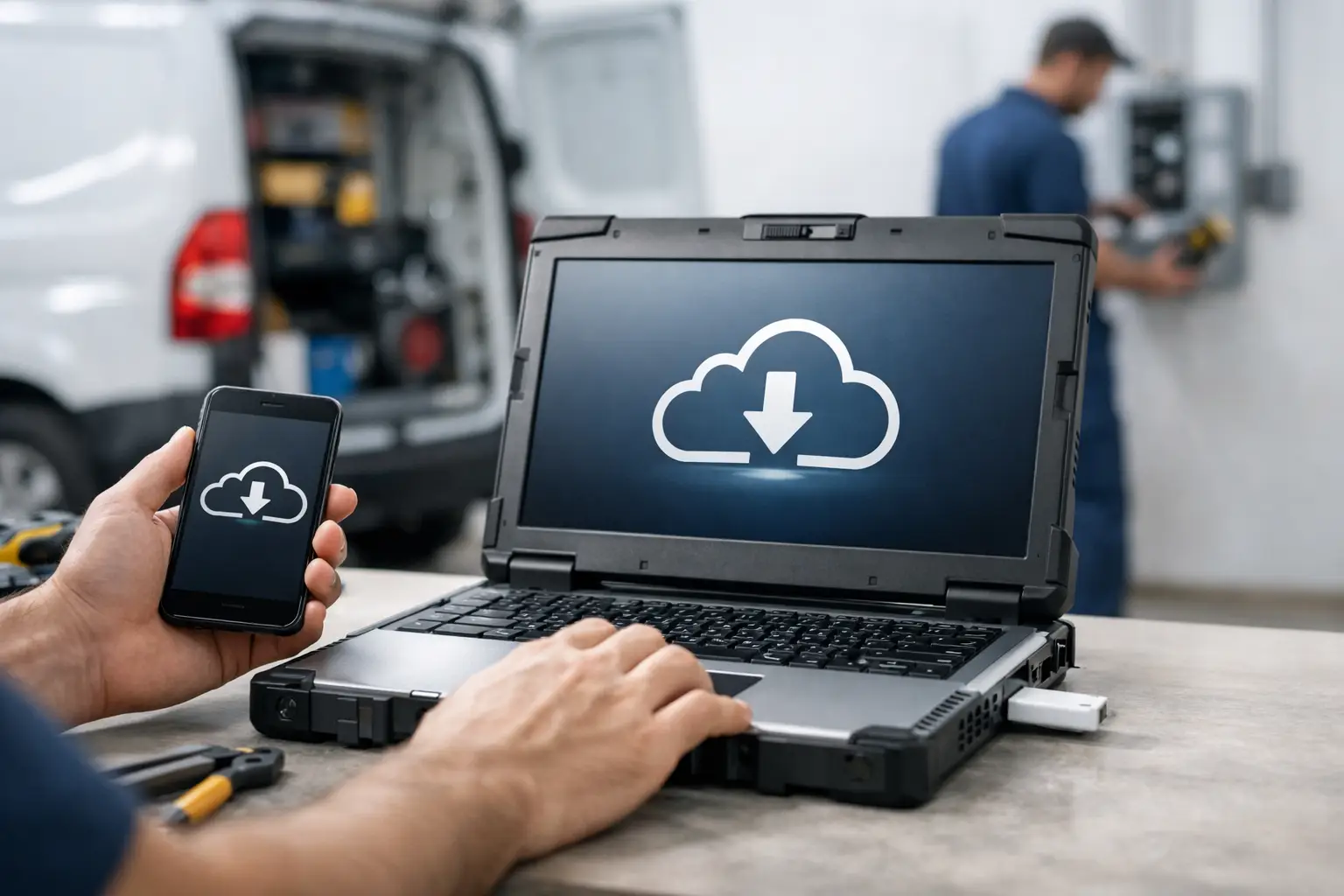
For this audience, digital delivery is not just a convenience. It is part of the value. If a technician needs to restore service capability today, waiting for physical media or extended handling time is wasted motion. A properly structured service software download gives the shop a faster path from purchase to installation to use.
That speed matters most when the machine is already apart, the replacement component is installed, and the final software step is what stands between downtime and completion. In those cases, instant access can have more operational value than a small price difference between products.
This is one reason digital diagnostic products have become standard in the aftermarket service space. They fit how modern repair work actually happens – immediate need, defined task, direct deployment.
Where buyers make expensive mistakes
Most bad software purchases come from one of three problems. The first is buying by brand name alone. Just because a package is associated with an OEM does not mean it supports the exact system or function needed. The second is assuming all diagnostic software includes programming or reset capability. It does not. The third is ignoring support files and workflow dependencies.
A common mistake is purchasing a tool to solve a locked or secured function without confirming whether the package includes the password utility, security access path, or related file support. Another is focusing on the software while overlooking the adapter, OS, or installation requirements.
Professional buyers avoid this by working backward from the task. Start with the repair operation you need to complete. Then confirm the software supports that exact workflow on that exact platform.
What serious shops look for now
The market has shifted. Shops are not just looking for code readers with better branding. They are looking for software that increases service control. That includes diagnostic access, programming support, parameter functions, factory-level resets, component matching, and brand-specific technical utilities that let the work stay in-house.
For independent repair operations and fleet maintenance teams, that control is directly tied to margin. Every function completed internally reduces subcontracted labor, dealer scheduling delays, and idle equipment time. That is why software selection is now a business decision as much as a technical one.
SYSTEMRTX operates in that exact space, where buyers need direct access to specialized files, OEM-focused service utilities, and workshop-ready software built around actual repair outcomes rather than generic tool claims.
Choosing the right service software download for your workflow
The right purchase is rarely the one with the longest feature list. It is the one that fits your machines, your service level, and your turnaround requirements. A shop doing advanced engine work needs different software than an operation focused on inspections and fault tracing. A mixed ag and construction fleet has different priorities than a diesel specialist focused on one engine family.
If the software supports the procedure that keeps the machine in your bay and gets it back to work under your control, it is the right kind of tool. That is the standard worth buying against.