
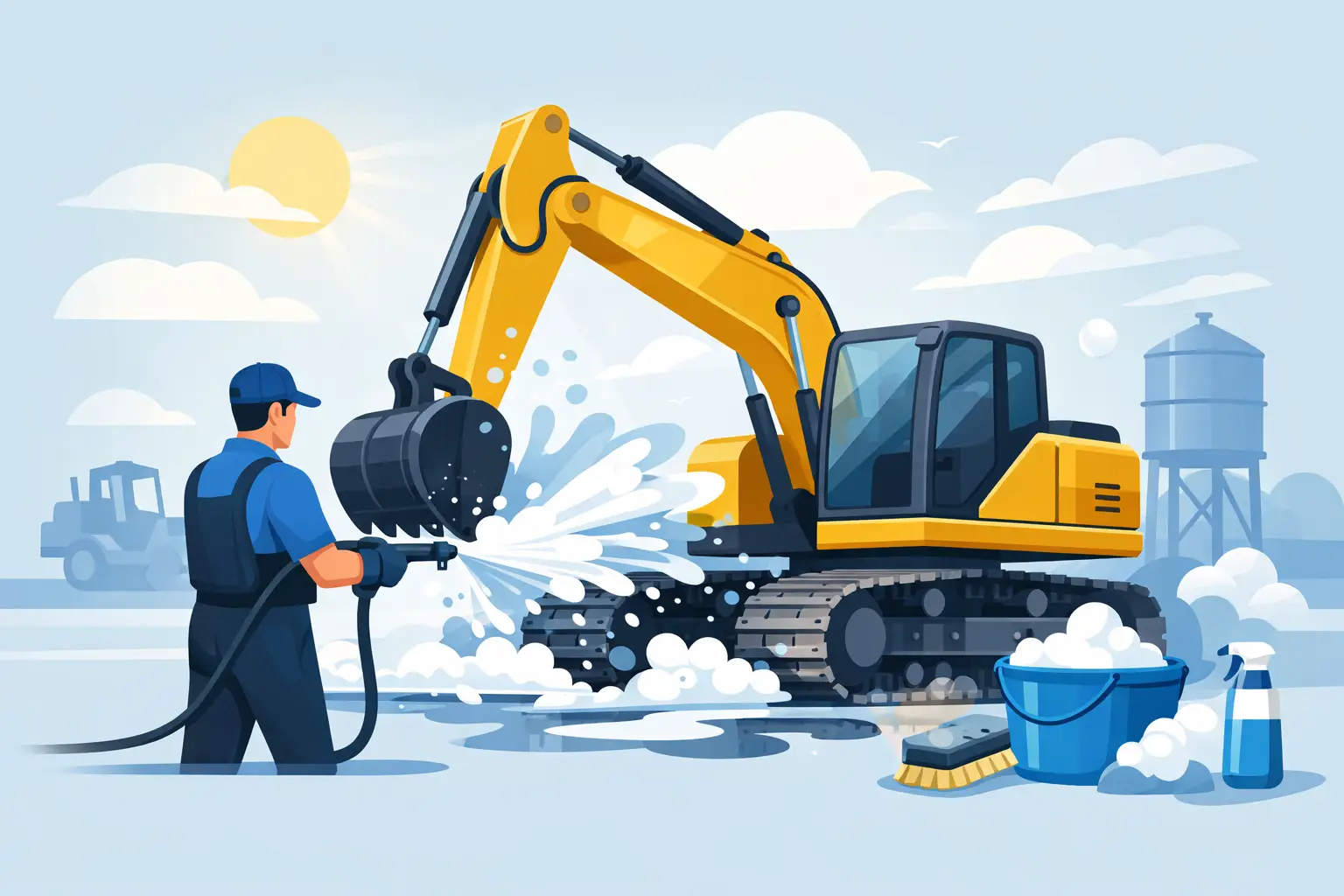
Mud packed around a final drive, grease baked onto a boom pivot, and oil residue hiding a fresh leak all create the same problem – you cannot inspect, service, or return equipment to work with confidence. Knowing how to clean heavy equipment is not a cosmetic issue. It is a maintenance task that affects uptime, failure detection, cooling performance, corrosion control, and shop efficiency.
For technicians and fleet operators, the goal is not to make a machine look new. The goal is to remove contamination without forcing water into electrical connectors, seals, bearings, breathers, or control modules. A proper wash process helps the next inspection go faster and makes service findings more accurate.
Why cleaning heavy equipment matters in the shop
On construction, ag, and industrial machines, dirt is not just surface debris. It traps heat around hydraulic lines, blocks radiator cores, accelerates corrosion around fasteners and battery trays, and hides cracked hoses, loose clamps, and seepage at pumps or cylinders. If a machine comes into the bay covered in mud and grease, diagnosis slows down immediately.
A clean machine also reduces the chance of contaminating components during repair. Opening a hydraulic system, electrical junction, or cooling circuit on a dirty unit increases the risk of introducing debris where it does real damage. In that sense, washing is part of the repair procedure, not a separate housekeeping task.
There is a trade-off, though. Aggressive pressure washing can create problems that were not there before. Water intrusion into switch panels, DEF components, sensor connectors, joysticks, and sealed but aging harnesses is common when the wash process is rushed. The right answer is controlled cleaning, not maximum pressure.
How to clean heavy equipment without creating failures
The best wash process starts before the pressure washer is turned on. Park the machine on a controlled wash pad or drainage-safe area. Let hot components cool down first, especially turbochargers, exhaust aftertreatment parts, hydraulic tanks, and engine surfaces. Spraying cold water onto high-heat components can shorten service life and, in some cases, contribute to cracking or distortion.
Before washing, complete a quick walkaround. Identify exposed breathers, damaged seals, cracked light housings, missing electrical caps, and any open service points. If the machine is already known to have weak connectors or compromised covers, protect those areas first. On some older units, it is smarter to hand-clean around the cab console, fuse panels, and engine electronics rather than wash them directly.
Dry removal comes next. Heavy clay, packed gravel, crop residue, and asphalt buildup should be scraped or brushed off before water is introduced. This reduces wash time and stops abrasive material from being blasted into pins, seals, and radiator fins. On undercarriages and track frames, this step matters more than most operators realize.
Apply detergent where it adds value. Grease, hydraulic oil film, road grime, and fertilizer residue usually need a degreaser or equipment-safe alkaline cleaner. Let the chemical dwell long enough to break contamination down, but do not let it dry on painted surfaces, glass, or polished rods. Chemical choice depends on the machine and contamination type. A product that works well on engine compartments may be too aggressive for decals, aluminum, or fresh paint.
Rinse using moderate pressure and controlled distance. High pressure has its place on track pads, buckets, and heavily packed chassis areas, but it should be reduced around seals, coolers, wiring, cab glass, and articulation points. Keep the spray angle shallow when cleaning radiator and charge air cooler stacks. Direct, close-range pressure can fold fins and reduce airflow.
Areas that need extra caution
Engine compartments are the most common wash-related failure zone. Alternators, starter connections, ECM housings, aftertreatment sensors, injector harness junctions, and fuse boxes do not respond well to careless pressure washing. If the machine requires engine bay cleaning, use low pressure, targeted degreaser, and rinsing discipline. Avoid forcing water upward into harness runs and connectors.
Cab interiors and operator stations need the same restraint. Modern heavy equipment uses more electronics than many wash procedures account for. Joystick controls, display units, switch membranes, seat sensors, HVAC control panels, and telematics hardware should be cleaned with cloths, brushes, and low-moisture products, not open spray.
Undercarriages deserve aggressive cleaning, but not blind cleaning. Tracks, rollers, idlers, sprockets, and step areas collect the worst contamination, especially in clay, demolition, and milling environments. Remove packed material thoroughly, then inspect for uneven wear, missing hardware, and seal damage. Washing is only half the job if nobody checks what the buildup was hiding.
Cooling packages require a separate approach. Radiators, oil coolers, condenser cores, and charge air coolers often plug from the fan side inward. In many cases, the correct cleaning direction is opposite normal airflow contamination. If you spray from the wrong side first, you can drive debris deeper into the stack. This is one of those areas where machine-specific service information matters.
The best tools for cleaning heavy equipment
If the question is how to clean heavy equipment efficiently, tool choice matters as much as technique. A hot-water pressure washer usually outperforms cold water on grease and oil contamination, but it is not necessary for every machine or every wash cycle. For routine dirt removal, cold water with the right detergent is often enough.
Soft and medium-stiff brushes help around hydraulic fittings, steps, hinges, and engine castings. Plastic scrapers are useful on painted surfaces and around harness routing where metal tools would cause damage. Foam sprayers and pump-up chemical applicators improve dwell time and reduce wasted detergent.
Compressed air is valuable after the wash, especially around connectors, radiator fins, belt drives, switchgear, and water-trap areas. It should be part of the process, not an optional extra. If a machine needs to return to service quickly, blow-drying key zones can prevent nuisance faults and belt slip.
For fleets with mixed equipment, standardizing wash chemicals is practical, but not always ideal. Fertilizer exposure, concrete dust, road salt, petroleum film, and forestry residue each respond differently. The right cleaner for one application may be inefficient or too harsh in another.
Post-wash inspection is where the value shows up
A proper wash should end with inspection, not just parking. Once the machine is clean, leaks become visible, missing clamps stand out, cracked welds are easier to spot, and serial tags or component labels can actually be read. If the equipment is coming in for diagnostics or programming, this matters. Clean battery compartments, visible harness condition, and accessible connectors reduce service time and lower the chance of contaminating plugs and ports during electronic work.
This is also the right time to lubricate where applicable. Washing can remove protective grease from exposed fittings, pins, and articulation areas. If the OEM maintenance schedule calls for post-wash greasing under severe-duty conditions, do it before the unit returns to work.
Machines with repeated wash exposure should be monitored for connector condition, dielectric seal integrity, and corrosion development. Frequent cleaning is beneficial, but only when it is matched with inspection discipline. Otherwise, minor water intrusion issues turn into intermittent electrical complaints that are much harder to trace later.
Common mistakes technicians still see
The biggest mistake is using maximum pressure everywhere. That approach is fast, but it ignores how many vulnerable systems are packed into a modern machine. Another common problem is washing a unit immediately after operation, when exhaust and hydraulic components are still at peak temperature.
Technicians also lose time by skipping pre-cleaning and overusing detergent. If five inches of mud are still on the track frame, chemical application is mostly wasted. And if detergent dries before rinsing, you create residue instead of removing it.
Finally, some shops wash equipment without a purpose. If the machine is being prepared for undercarriage inspection, cooling system service, leak tracing, or electrical troubleshooting, the wash process should match that objective. Clean for the next task, not for appearance alone.
When a basic wash is not enough
Some units need decontamination rather than standard cleaning. Equipment exposed to fertilizer, salt, concrete slurry, fire debris, or hydraulic failures may require repeated washing, neutralizing products, and partial disassembly to remove trapped contamination. A single exterior rinse will not stop corrosion or eliminate debris migration.
For machines coming in for advanced service, especially diagnostics around electrical, hydraulic, or cooling complaints, cleaning is part of preparation. That is where a disciplined shop gains time. A clean machine is easier to inspect, easier to connect to, and easier to return to the customer with fewer comebacks. That same results-first approach is why professional service operations rely on technical resources from suppliers such as SYSTEMRTX when the job moves from cleaning into diagnosis, calibration, and dealer-level repair workflows.
Clean equipment tells the truth faster, and in this business, that saves more money than a shiny paint finish ever will.